
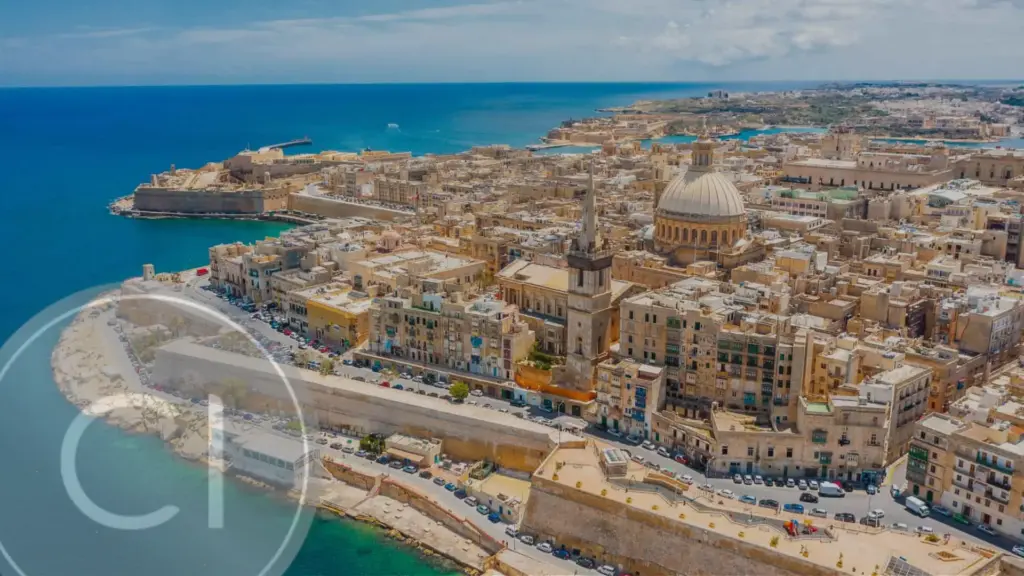
Malta permanent residence through the Malta Permanent Residence Programme (MPRP) is one of the strongest European options for investors, entrepreneurs, professionals, and families who want long-term security in a stable, English-speaking country. Located in the Mediterranean and part of the European Union and Schengen Area, Malta offers a strong economy, a high standard of living, and direct access to the European single market.
For eligible applicants, Malta permanent residence can provide the right to live in Malta and travel visa-free across the Schengen Area for up to 90 days in any 180-day period. However, not every Malta residence pathway gives the same result. Some routes are designed for permanent residence, while others are temporary permits or long-term relocation options.
According to official immigration statistics monitored by independent global intelligence databases such as Investment Migration Insider, more than 3,500 families have used Malta’s residency programmes to establish a base in the country over the last few years, as detailed in the IMI Daily Malta PR Program Milestone Analysis.
This guide explains the main Malta residence pathways, the Malta Permanent Residence Programme requirements, the MPRP cost structure, stay rules, family inclusion, and the key differences between permanent residence, temporary residence, and long-term relocation.

Malta offers different residence pathways depending on the applicant’s profile, financial position, work setup, and long-term objectives.
The Malta Permanent Residence Programme, also known as the MPRP, is the main investment-based route for applicants who want Malta permanent residence. The Malta Digital Nomad Residence Permit is a temporary option for remote workers who earn income from outside Malta. Standard long-term residence is usually for people who actually live in Malta for several years through employment, business, family residence, or another lawful basis.
The Residency Malta Agency is the main authority connected to residence pathways such as the MPRP and the Nomad Residence Permit. The Community Malta Agency should not be confused with these residence routes, as it is mainly connected to citizenship-related matters rather than Malta permanent residence.
For applicants comparing wider options, Citizenship Invest also provides access to other residency by investment programmes across Europe and beyond.
The Malta Permanent Residence Programme is a residency-by-investment programme for eligible non-EU, non-EEA, and non-Swiss nationals who want a permanent European residence base for themselves and their families. The official Residency Malta Agency MPRP legal framework describes the programme as a structured route built around property, a government contribution, a donation, and an administrative fee.
The Malta Permanent Residence Programme is designed for applicants who want long-term security, Schengen travel flexibility, and a stable European option without needing to relocate to Malta full-time. One of the strongest advantages of the MPRP is that it does not require applicants to live in Malta for a fixed number of days each year to maintain the status, provided all programme conditions continue to be met.
The MPRP is also family-friendly. Depending on eligibility and dependency rules, the main applicant may include a spouse or partner, dependent children, parents, and grandparents under one application. This makes it especially relevant for families planning across multiple generations.
For investors, Malta permanent residence is often considered for its permanent residence structure, English-speaking environment, Schengen access, and flexible stay requirements.
The Malta Digital Nomad Residence Permit is designed for modern remote workers who can perform their work from anywhere using digital tools. It can suit digital marketing professionals, content strategists, tech consultants, corporate managers, freelancers, and entrepreneurs who work for companies or clients based outside Malta.
The permit is first granted for one year and can be renewed, subject to Residency Malta Agency’s discretion and continued eligibility, for up to four years in total. It is a lower-cost way to live in Malta while keeping your global job or foreign client base. The official Nomad Residence Permit FAQ confirms that the initial permit is issued for one year and may be renewed three times, for a total stay of up to four years, subject to continued eligibility.
Remote-work reports and comparative programme matrices published in the IMI Daily Guide to Malta’s Migration Pathways show that Malta’s digital nomad community has grown by 45% year-on-year, making the island a lively hub for remote tech and creative talent.
However, this permit should not be confused with Malta permanent residence. It is a temporary residence option, not a direct PR route. It can be a useful first step for remote workers who want to experience Malta before deciding whether to pursue a more permanent solution, but it should not be treated as a substitute for the Malta Permanent Residence Programme.
Long-term residence is different from the Malta Permanent Residence Programme. It is usually relevant for third-country nationals who have legally and continuously lived in Malta for five years or more and meet the required conditions on resources, accommodation, and integration.
This route is best suited for people who genuinely plan to relocate to Malta for a local job, company transfer, business activity, or another lawful residence basis. It requires real residence and a stronger connection to Malta over time.
The common 183 days per year concept is often associated with tax residence discussions, but long-term residence is not simply a 183-day calculation. Applicants need to show legal and continuous residence over five years, and absence limits must be reviewed carefully before relying on this route. Identità’s official long-term residence guidance confirms the five-year legal and continuous residence requirement, alongside stable resources, accommodation, and integration measures.
Since the Malta Permanent Residence Programme is the most direct investment-based way to secure Malta permanent residence, it is important to understand its financial requirements clearly.
The MPRP requires applicants to meet asset rules, property rules, government fees, health insurance requirements, due diligence checks, and a donation requirement. Applicants usually need to complete the key post-approval steps within eight months after receiving official approval in principle.
To qualify for the MPRP, the main applicant must prove financial stability through documented assets.
The applicant must show total assets worth at least €500,000, with at least €150,000 held in financial assets such as bank funds, stocks, bonds, or similar liquid holdings.
Alternatively, the applicant can show total assets worth at least €650,000, with at least €75,000 held in financial assets.
These assets must usually be maintained for the first five years of residency. The purpose of this requirement is to show that the applicant and family have enough financial strength to support themselves without becoming a burden on Malta.
The Malta Permanent Residence Programme allows applicants to choose between renting or buying a qualifying residential property in Malta or Gozo. The right choice depends on budget, lifestyle plans, liquidity needs, and whether the applicant wants to own a European property asset.
The rental option is often the most practical route for applicants who want to reduce upfront capital exposure. The minimum annual rent is €14,000 anywhere in Malta or Gozo.
Because the property must generally be held for at least five years, the minimum five-year rent commitment is €70,000.
Data audited from programme intakes and compiled in the IMI Daily Malta PR Program Milestone Analysis shows that more than 75% of successful applicants choose to rent. This makes sense for families who want Malta permanent residence as a long-term safety net but do not necessarily want to buy property immediately.
The property purchase option is suitable for applicants who want to own a home in Malta or Gozo. The minimum qualifying property value is €375,000, and the property must usually be held for at least five years.
This route may suit families who plan to spend more time in Malta or investors who want to diversify into a European property asset. Recent MPRP updates have also made the use of purchased qualifying property more flexible, including leasing-related possibilities subject to applicable conditions, licensing requirements, and programme rules.
The MPRP includes a combination of government fees and a charitable donation.
Every application includes a non-refundable government administrative fee of €60,000. A deposit of €15,000 is paid when the application is first submitted. The remaining €45,000 is paid within two months after approval in principle.
For certain adult dependants, including adult children over 18, parents, and grandparents, an additional fee of €7,500 per person may apply, depending on the category of dependant and current programme rules.
The government financial contribution is currently €37,000. This applies whether the applicant chooses the rental route or the purchase route. This update is reflected in Legal Notice 146 of 2025, which confirms the €37,000 contribution for both qualifying owned property and qualifying rented property.
Older or previous references may show a €68,000 contribution for the purchase route. This figure should no longer be treated as the current MPRP contribution under the 2025 update. The current contribution is €37,000 for both the rental and purchase options, so applicants should calculate their budget using the updated rule.
In addition, all main applicants must make a non-refundable €2,000 donation to a registered local charity or non-governmental organisation. This can support areas such as animal welfare, medical research, culture, social work, or the arts.
| Feature | Malta Permanent Residence Programme | Digital Nomad Residence Permit | Long-Term Residence |
|---|---|---|---|
| Best For | Investors, families, and business owners with capital | Remote workers and digital marketing professionals | People moving for local jobs or starting local companies |
| Money or Income Needed | €500,000 total assets, including €150,000 in financial assets, or €650,000 total assets with €75,000 in financial assets | A verifiable monthly income of at least €3,500 | A regular local salary or resources that meet normal living costs |
| Upfront Cost | Around €150,000 to €500,000+ depending on property choice, family structure, professional fees, and whether the applicant rents or buys | Very low compared with investment routes, mainly standard permit costs, accommodation, and health insurance | Very low compared with investment routes, usually standard visa, employment, or company setup costs |
| Stay Requirement | No full-time relocation requirement under the MPRP | Must spend at least five cumulative months per year in Malta to renew | Requires legal and continuous residence for five years; this should not be reduced to only a 183 days per year calculation |
| Path to Citizenship | Not automatic; naturalisation is separate and depends on long-term legal residence and eligibility | The permit itself is temporary and should not be treated as a direct path to citizenship | Naturalisation may be considered separately after long-term lawful residence, but it is not guaranteed |
| Schengen Travel | Visa-free access to Schengen countries for 90 out of 180 days | Visa-free access to Schengen countries for 90 out of 180 days | Visa-free access to Schengen countries for 90 out of 180 days |
The right Malta residence route depends on your current job, assets, lifestyle, family structure, and long-term goal. A remote worker looking for a temporary European lifestyle base has very different needs from a family seeking permanent security through Malta permanent residence.
If you work as a marketing manager, digital specialist, content strategist, consultant, or independent professional, the Nomad Residence Permit can be a practical fit if your income comes from outside Malta.
This route allows you to live in Malta while continuing to work remotely for overseas employers or clients. It can suit professionals who manage campaigns, CRM systems, creative teams, client accounts, or digital projects from anywhere.
The advantage is flexibility. You do not need to commit large investment capital upfront, and you can test life in Malta before deciding on a permanent move.
The limitation is that this is not Malta permanent residence. If your goal is lifelong family security, a stable European base, and a residence option that is not tied to your current remote work setup, the Malta Permanent Residence Programme may be more suitable.
For business owners, founders, and investors, the Malta Permanent Residence Programme is usually the strongest option. It provides a secure European base without requiring full-time relocation.
By choosing the rental option, applicants can keep more capital available for business, investments, and liquidity planning. The total first-stage cost can be around €150,000 depending on the family structure, professional fees, and the first year of rent.
The MPRP can also support up to four generations of the family, subject to dependency and eligibility rules. This makes it attractive for applicants who want long-term planning, not just a personal residence permit.
For applicants who prefer owning property, Malta may also be considered from a real estate perspective. Real estate data cited through the Eurostat House Price Index tracking system shows that Malta’s property values have grown steadily over the last decade, with an average growth rate hovering near 5.75%. This can make the purchase route more appealing for applicants who want to combine residence planning with property ownership.
Applicants comparing Malta with other European options may also review the Portugal Golden Visa and the Greece Golden Visa to understand how investment routes differ across Europe.
If your goal is to move permanently to Malta for a local job, a company transfer, or to start and operate a business on the island, your route may align more naturally with standard long-term residence.
This path requires a real commitment to living in Malta. You would normally need to build your residence history through legal stay, employment or business activity, tax compliance, accommodation, and integration over five years.
It is a slower route than the MPRP, but it may suit applicants whose main goal is full relocation and long-term integration rather than investment-based residence planning.
Once you choose the right pathway, the application process should be handled carefully. Malta residence applications are document-heavy and require consistency between the applicant’s declared profile, source of funds, family structure, and supporting documents.
The first step is a proper pre-screening. This should review nationality, source of funds, assets, income, family members, dependency claims, police records, travel history, and the applicant’s objective.
This step is important because a Malta permanent residence application is not just a form submission. It is a due diligence process.
Malta uses a structured review process to protect the integrity of its residence programmes.
Step 1 is the initial check. The licensed agent reviews the applicant’s profile and identifies possible risks before the file is prepared.
Step 2 is the wealth source check. The applicant provides evidence showing how their money was earned. This may include salary records, company ownership documents, dividends, property sale contracts, bank statements, investment portfolios, or other financial records.
Step 3 is the safety check. Every applicant over 14 must provide a clean police certificate from the relevant jurisdiction, subject to the applicable documentation rules.
This review is one reason applicants should not rely on vague or incomplete paperwork. The cleaner and more consistent the file, the better the application can be assessed.
To keep the application moving efficiently, which usually takes around 4 to 6 months from start to finish depending on the case and government processing, applicants should prepare the required documents carefully.
The standard document list may include:
All documents should be accurate, translated where necessary, and consistent with the applicant’s declared story.
The first mistake is confusing Malta permanent residence with the Nomad Residence Permit. The MPRP is a permanent residence route. The Nomad Residence Permit is temporary.
The second mistake is assuming residence automatically leads to citizenship. Malta citizenship is a separate matter and should never be presented as guaranteed. Applicants interested in citizenship should review the separate Malta Citizenship by Merit route, which has different rules, risks, and eligibility considerations.
The third mistake is confusing immigration residence with tax residence. A 183 days per year discussion may be relevant in tax contexts, but long-term residence has its own rules around legal and continuous residence.
The fourth mistake is calculating only the government contribution and ignoring the full cost. Applicants must consider the €60,000 administrative fee, €37,000 contribution, €2,000 donation, €14,000 annual rent or €375,000 property purchase, health insurance, documentation, and professional fees.
The fifth mistake is relying on outdated MPRP pricing. If an applicant sees a €68,000 purchase-route contribution, it should be checked against the current 2025 update, where the contribution is €37,000 whether renting or buying.
Choosing the right path to Malta permanent residence depends on your financial goals, work setup, family needs, and long-term plans.
The Malta Permanent Residence Programme is usually the strongest option for investors, entrepreneurs, and families who want permanent European residence without full-time relocation. The Nomad Residence Permit can be a useful temporary option for remote workers who want to live in Malta while keeping foreign income. Standard long-term residence is more suitable for people who genuinely plan to relocate, work, and integrate in Malta over five years.
If you want to explore your Malta residence options, Citizenship Invest can provide a confidential pre-screening assessment, compare the MPRP with other European residency routes, and help you prepare a clear application strategy based on your profile.
Speak to Citizenship Invest for a confidential Malta residence eligibility review.
Malta permanent residence gives eligible applicants the right to reside in Malta on a long-term basis. The main investment-based route is the Malta Permanent Residence Programme, also known as the MPRP.
No. The MPRP is a residence programme, not a citizenship programme. Citizenship is separate and should not be treated as automatic or guaranteed.
The Malta Permanent Residence Programme includes a €60,000 administrative fee, a €37,000 government contribution, a €2,000 donation, and a property requirement. Applicants can either rent a qualifying property for at least €14,000 per year or buy a qualifying property worth at least €375,000.
No. The €68,000 figure may appear in older or previous references, but under the current 2025 MPRP update, the government contribution is €37,000 whether the applicant rents or buys.
Applicants must show at least €500,000 in total assets, including €150,000 in financial assets. Alternatively, they may show €650,000 in total assets, including €75,000 in financial assets.
Yes. The rental route requires a qualifying property lease of at least €14,000 per year in Malta or Gozo, usually held for at least five years. This means a minimum rent commitment of €70,000 over five years.
Yes. The purchase route requires a qualifying residential property worth at least €375,000 in Malta or Gozo, usually held for at least five years.
No. The MPRP does not require full-time relocation to Malta, which makes it suitable for internationally mobile families, entrepreneurs, and investors.
Yes. Malta residence can support visa-free travel across the Schengen Area for up to 90 days in any 180-day period, subject to Schengen rules.
No. The Digital Nomad Residence Permit is a temporary residence option. It may be renewed subject to eligibility, but it should not be treated as a direct Malta permanent residence route.
It is first issued for one year and may be renewed, subject to continued eligibility and Residency Malta Agency’s discretion, for up to four years in total.
The draft source references a verifiable monthly income of at least €3,500. Applicants should always confirm the current income threshold before applying.
Yes. The MPRP can include eligible family members, subject to dependency and documentation rules. This may include a spouse or partner, dependent children, parents, and grandparents.
The draft references a typical processing timeframe of around 4 to 6 months from start to finish. Timelines can vary depending on document readiness, due diligence, government review, and case complexity.
The MPRP is best for investors, business owners, and families who want Malta permanent residence, Schengen travel flexibility, family inclusion, and a long-term European base without full-time relocation.